Menampilkan postingan yang diurutkan menurut relevansi untuk kueri medical tourism. Urutkan menurut tanggal Tampilkan semua postingan

Jumat, 08 April 2016

Medical Tourism Gone (Horribly) Wrong

It's been a while since we've covered Medical Tourism, but this one's a doozy.

For folks just tuning in, Medical Tourism is (basically) leaving one's home country to obtain care, often surgery or dental work, in another country where costs are lower. Unfortunately, he learned the hard way that "you get what you pay for:"
"Australian man dies days after traveling to Malaysia for cheaper plastic surgery"
Seems that 31 year old Leigh Aiple had traveled to Malaysia for a "tummy tuck, liposuction, an upper eye lift" and other appearance enhancements. What he got, though, was  "gaping holes, there was stitching everywhere."

How's that saying go? Oh, yeah.

Senin, 21 November 2016

Yeah, About That Cost Curve

We were promised from the outset that The ObamaTax would "bend the cost curve down;" that is, reduce the costs of both providing and paying for health care.

Here at InsureBlog, we've also blogged extensively about Medical Tourism, where folks go across the border (or the ocean) in search of cheaper health care.

Reason I bring these up is because our friend Holly R tipped me to this interesting piece at CNBC:

"Here's where you can get health care a lot cheaper than in the US"

The article gives several examples of care purchased in France versus here. For instance:

"[A] single day in a hospital in the U.S. costs, on average, $1,514 (up to as much as $12,537), while in France it costs $853."

And:

"Hip replacement surgery costs an average of $25,061 (up to $87,987) in the U.S., but just $10,927 in France."

Of course there are various travel expenses involved, but depending on the time of year, and how far ahead one booked, it seems likely that the total cost would still be a (significant?) net savings.

To be sure, this really only works for elective (non-emergency) procedures, and it's also only available to those with the resources to pay for flights and lodging, plus the fact that one's going to have to front the money (no insurance billing back to Blue Cross or Humana). And follow-up care may be an issue, as well.

But what really piqued my interest was that the author focused on why costs here in the US varied so widely from area to area, city to city, and the role insurance companies play in negotiating prices. It does acknowledge the role that tort-reform could play in reducing the cost of (for example) malpractice insurance.

But it completely missed the elephant in the room (and to be fair, that's perfectly understandable: it is about the advantages medical tourism, after all). So what goes unsaid here?

"Remember the President's assurances that his ACA would finally “bend the cost curve”?"

That is, one of the explicit promises of ObamaCare was that not only would insurance rates go down, but so would the overall cost of health care itself.

So how's that working out?

Rabu, 31 Agustus 2016

Mid-Week Linkage Roundup

■ From the "Everything Old is New Again" Department: My late mother had Post-Polio Syndrome, a result of childhood exposure, but (thankfully) she never had the full-blown version of the dread disease. A common treatment for those that did was the so-called "iron-lung." Fortunately, we've long since eradicated polio, but FoIB Allison Bell warns that we may have to dig those old machines out of mothballs:

"Zika May Be Polio All Over Again ... the CDC concluded, “after careful review of existing evidence,” that “Zika virus is a cause of microcephaly and other severe fetal brain defects” in newborn infants."

Heads' up.

■ Co-Blogger Mike thinks that Belgium might be catching up to Sweden in the Bizzaro World medical tourism race:

"Euthanasia tourists are flocking to Brussels to get a lethal dose. Doctors at hospitals and clinics at Belgium’s capital are seeing an increase in number of euthanasia tourists who are travelling from across the world"

Supply and demand.

■ FoIB Jeff M first alerted us to troubles brewing for North Carolina's Blue Cross franchise back in May. Today he shares this update in the continuing saga:

"The N.C. Department of Insurance announced Monday it will broaden its investigation into Blue Cross and Blue Shield of North Carolina, citing “disagreements” with the insurer."

At issue are continuing IT and claims processing issues.

Gotta love the tech.

■ And finally, via FoIB Holly R, this sad (and highly unusual) case from Great Britain (and for once, it's not about the MVNHS©):

"[A] 61-year-old British bagpipe player who developed a dry cough and breathlessness that worsened over a period of seven years ... He died several weeks after entering the hospital"

Turns out, several different - and deadly - fungi had taken up residence in his bagpipe, which he had neglected to clean. Truly sad, but perhaps a helpful warning to fellow pipers.

Death by Amazing Grace?

Selasa, 11 Oktober 2016

CanuckCare & Medical Tourism, Revisited

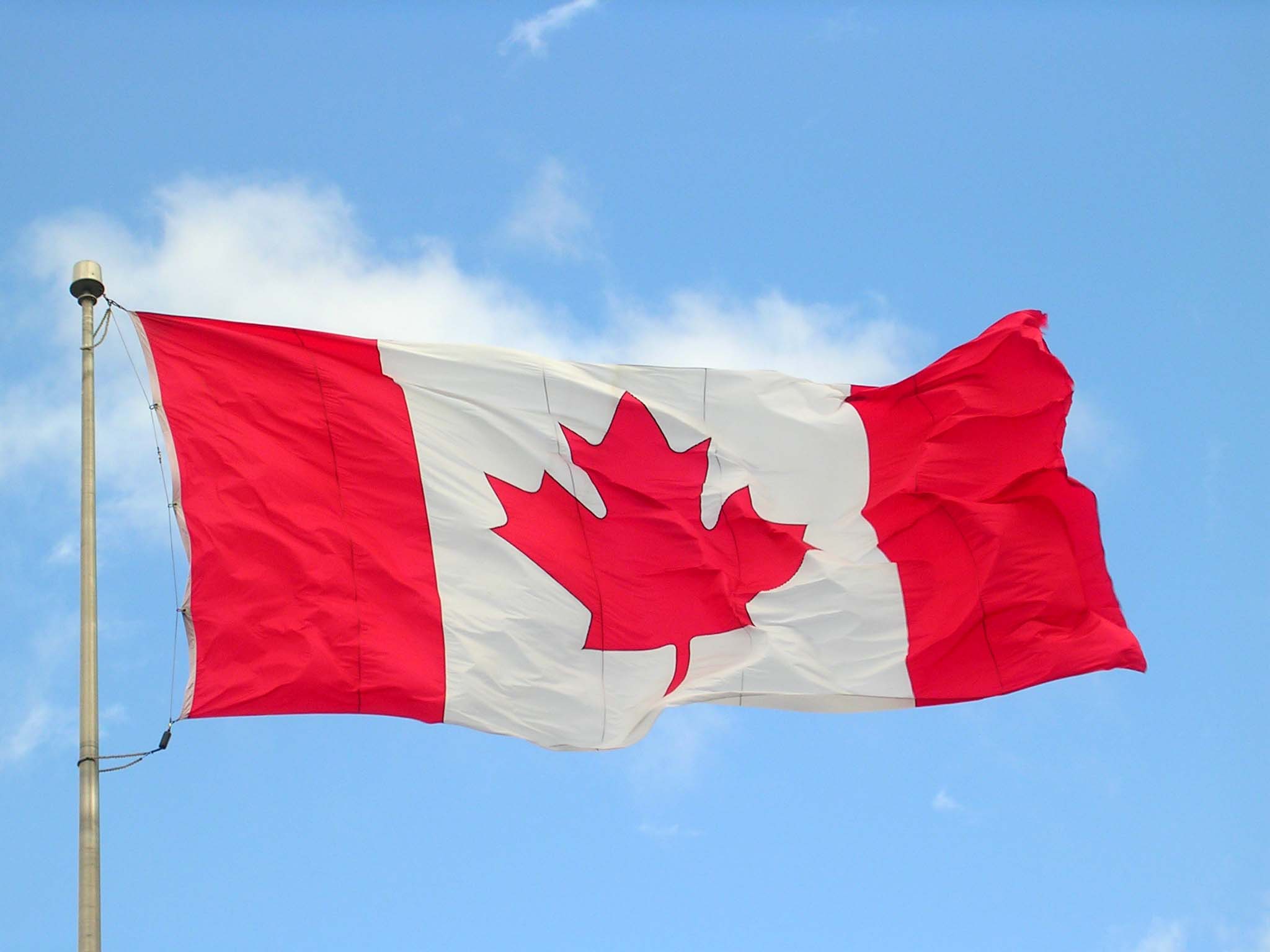
We've been blogging about the propensity for many of our Neighbors to the North to come south of the border to receive actual health care, such as in this post from over 6 years ago:

"Canadian Premier Danny Williams has chosen to circumvent the obviously superior (and free!) Canadian health care system, by flying to the United States for heart surgery, which is widely and freely available in his home country."

Previously, other powerful Canadians, such as MP Belinda Stronach had also chosen to have care rendered here.

Now FoIB Holly R helpfully alerts us to this factoid:

"An estimated 52,000 Canadians left the country to receive non-emergency health care in 2014"

Reason I bring this up is that recently, one of the two major party Presidential candidates averred that many Canadians come here for care that is supposedly widely and quickly available in their own country. Now, it's true that there have been recent attempts to privatize at least some sectors of the Canadian boondoggle health care system, with mixed results. But the fact remains that such care is unavailable to the majority of Canadians, and the sad truth is that the implosion of our own system impacts them, as well.

Just an observation.